Quiladelphia


Exhumation
Video Art Visions: On Golden Days
James J Robinson rewrites history with an all-Asian cast, considering the dark realities washed over by nostalgia
Amplifying the high-glamour, high-camp aesthetics that differentiate the past from the present, the reflections we cast on bygone eras depict a simpler time where style and poise were inherent. But when does romanticizing the past begin to blur its harsh realities? For image-makers across film, TV and advertising, the visual appeal of this stylized brand of kitsch is undeniable. Yet, the speed at which content is produced and circulated in today’s landscape threatens a loss of context for younger generations – capturing a past without the prejudices and political conservatism that plagued these “golden eras”.
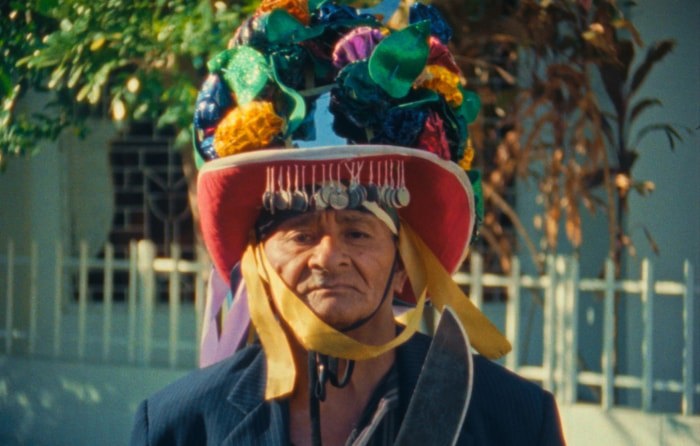
In short film On Golden Days, Australian-Filipino director James J Robinson considers the architecture of nostalgia and the risk of erasure that accompanies it. Rewriting history through a diasporic lens, Robinson assembles an entirely Asian cast and crew from across the continent and its global diasporas, critiquing the discriminatory law-making of his home country by envisaging a history the White Australia Policy didn’t allow to happen.
Rather than playing into oppression, we want to 'rewrite history' by means of radical optimism; to find a shared universal experience in ‘otherness’, showing Asian talent of all ages and diasporas in exaggeratedly glamorous period photos.
Shot on 35mm, and part of a wider photography and film project, exhibited in Melbourne and Tokyo, On Golden Days employs nostalgic reference points, from Hollywood musicals to Ford Mustangs, disrupting the archetype by situating Asian talent within these contexts. Ironically protesting the improbability of the representative image it portrays, Robinson constructs a false reality driven by a progressive, inclusive future – in which the “golden days” were experienced by all, not just those invited to direct the narrative.
On Golden Days was supported by the Australian Council for the Arts, and was exhibited at Hillvale Gallery in Melbourne and Gallery Tsukigime in Tokyo in 2022.
Why was it so important for you to rewrite history through a diasporic lens?
The industry of nostalgia generates capital by selling a neatly packaged image of the past. It makes sense in a time where people on all sides of the political spectrum are increasingly unhappy, anxious and polarized. For first and second generation immigrants in Western countries, this is a particularly strange experience. In my home country of Australia, people of color were banned from migrating to the country under the ‘White Australia Policy’ until as recently as 1973. What does it mean to see romantic cultural throwbacks to an era that so openly excluded us? The subtext is, “We liked it better when you weren’t here” – a fair sentiment coming from First Australians, but not for anyone else.
In what ways has your own experience shaped your vision of the past?
The past is a puzzle I’m always trying to piece together, knowing the most it could be is a soulless stock image perforated with lines. It’s hazy enough remembering my own life, so building an idea of the world that predates me is even more abstracted by intergenerational storytelling. What I do see clearly is the intergenerational trauma in my blood and friends around me: colonization, hypermasculinity, the trauma of war, and a resulting generation’s inability to dig into the root of their behaviors and predispositions. I see the past in parents stubbornly putting the capitalist dream on life support, a family’s inability to emotionally connect, in the mental health crisis, in the fear of an exponentially changing world, and the criticism that our generation is too soft.
How did you cast for the film?
It was important to build an accurate sample pool of Asian-Australians – we looked less at agencies and more at friends, family members, people off the street. Having cast members from all across Asia – from Pakistan and India, across to Japan and the Philippines – meant we could find universality in our shared experiences of nostalgia. The process was more important than the final product. Coming together and dressing up, putting someone in a Hollywood gown, spending two hours on someone’s grandmother’s hair: we were giving ourselves access to a time in Australian history that actively excluded us, using glamor and irony. The exhibition was just the excuse to make this happen.
Are there reference points that offer an accurate vision of nostalgia for you?
It’s in the hands of careless creators where the damage is done. For every artist fetishizing the past, there is another looking at it with a critical microscope. I don’t think I’ve seen a more balanced unpacking of nostalgia than Virginia Woolf’s ‘Mrs. Dalloway’. It was published in 1925, but half the novel is set in the memories of its characters. It holds the past against the present at all times. Woolf has a way of frolicking in the past while recognizing the danger of doing so. Our project goes hard in one direction for irony’s sake, but nostalgia handled with nuance is the most accurate.
Does anyone stand out for heroing minority representation in classic cinema?
Outside the West there’s countless but they only become classified as minorities through the Western lens. Anna May Wong is an obvious hero in American Hollywood history for me, an early Chinese-American star in the time of yellowface. The quiet queer history of Hollywood is fascinating, you’ve got an industry banning homosexual stories for obscenity, but have Rock Hudson and Katharine Hepburn on screens, Tennessee Williams penning some of the greatest narratives. Looking for queer representation in classic cinema looks hard from the outside, but between the lines it’s everywhere. I wish I could say the same for non-white actors and storytellers.
What do you consider the greatest dangers of a white-washed history?
History repeats itself, but right now history is the most documented and accessible it has ever been. It would be a shame if that wasn’t enough to stop our cycles. Over-romanticizing the past is very human – it’s a way to cope, but it’s also dangerous on a collective scale. Erase the uncomfortable parts and we’ll repeat them. I don’t mean for this to sound pessimistic, instead, finding a way to hold the past in its messy whole actually offers us a really exciting and expansive future.
Between Melbourne and LA, have you seen a distinction in the way nostalgia is lensed?
There’s a massive difference between the two, the myth of American exceptionalism is currently collapsing on itself, so the need to recall its supposed mid-century prosperity by privileged artists feels more critical for its future. It’s a country realising the rest of the world never bought into their self-importance as much as they did. Australia has its own problems grappling with dark colonial history and racist immigration policies, but its nostalgia feels less solipsistic. Both countries have different reasons to romanticize the past — Australia to figure out its identity, and America to desperately cling to it.
May 26, 2023