Home
AUGURE: Infinite Trolling
Sound Vision: iwoyi: within the echo
Tayo Rapoport and Rohan Ayinde explore Black British music as a force for community and transformation in an Afro-surrealist voyage through vision and sound.
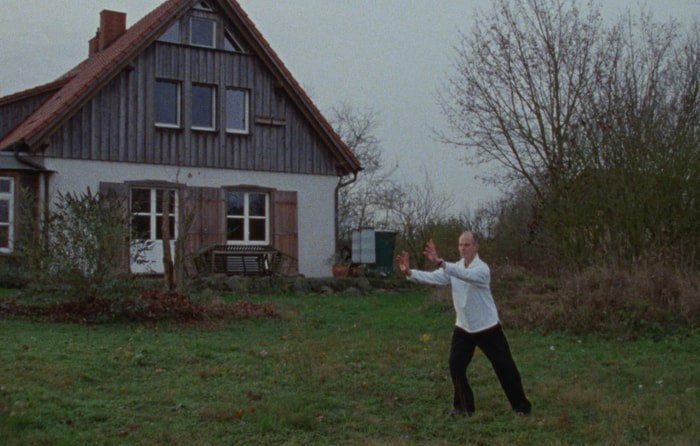
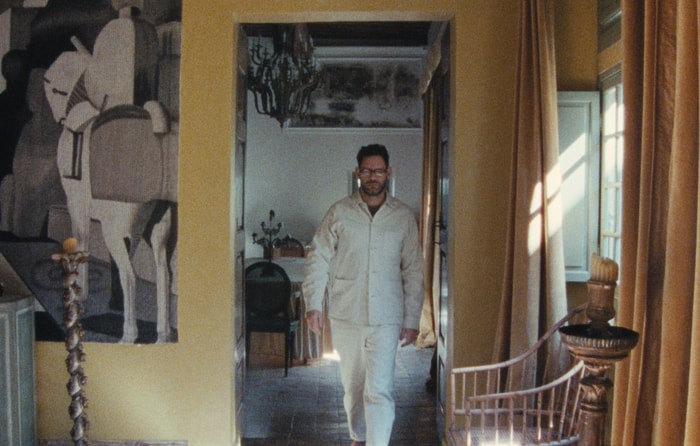
Descending through a black hole into radical imaginings shaped by Black British music, multidisciplinary artist Rohan Ayinde and director and installation artist Tayo Rapoport initiate an Afro-surrealist journey into the past, the present, and the reparative potential of the future for their debut short film iwoyi: within the echo.
Developed in collaboration with Errol and Alex Rita’s South London musical movement and curatorial studio, Touching Bass, iwoyi: within the echo translates their transportive multi-channel installation film, commissioned by the British Library and curator Dr. Aleema Gray, constructing a multisensorial space within its landmark exhibition Beyond the Bassline: 500 Years of Black British Music.
We would not have made this film without the prompt from Dr. Aleema Gray to think about radical and reparative futures and the power of Black music to shape spaces of possibility and rupture. At the heart of the film is the Black radical imagination. We wanted the poetry, visuals and score to be engaged in a call and response that made the film feel like it was a fluid conversation between all three.
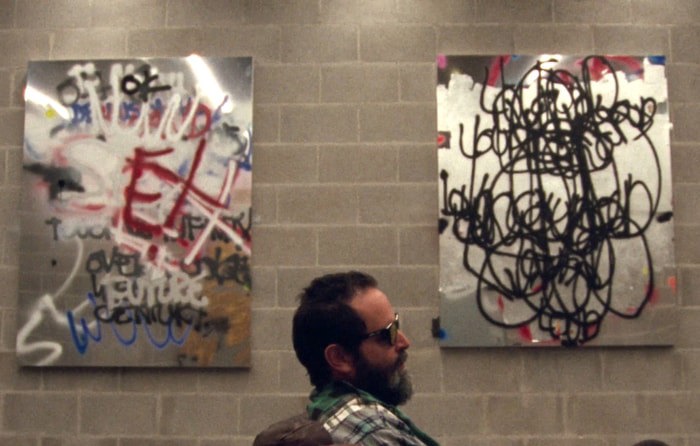
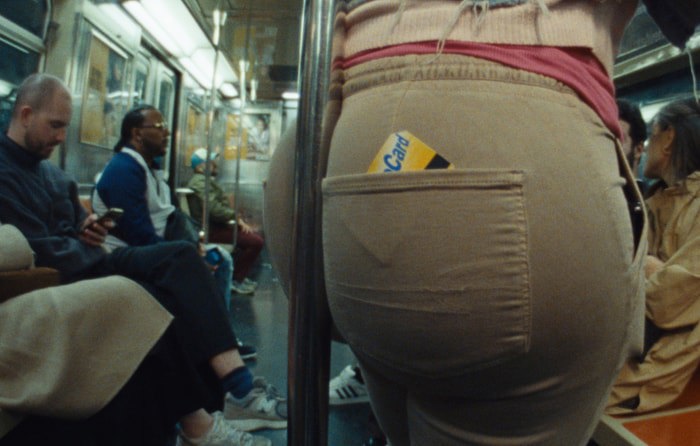
A rich sonic and visual exploration, narrated through interconnected elements – layering original film and Rapoport's archival footage with Ayinde’s poetry and an original score composed by Melo-Zed – iwoyi: within the echo reflects on Black British music as an axis of diasporic communities, relationships and feeling. Referencing photographer Simon Wheatley’s documentation of the UK grime scene, Sun-Ra’s Afro-futurist vision and Jenn Nkiru’s short film Rebirth Is Necessary among others, Ayinde and Rapoport enter a dialogue with history as a portal to the future, illuminating music’s reverberations within core cultural touchpoints, and as a source of liberation through the communities that form around it.
Beyond the Bassline: 500 Years of Black British Music is on display at the British Library until 26 August 2024.
How did the concept for the film first evolve?
There’s a myth about one of the early Touching Bass dances. It describes this one time the dancefloor started to lift off, becoming a spaceship and transporting everyone in the dance to outer space. We were both there. It was a moment that continues to shape the language and legacy of TB. This myth is one of the film’s seeds. Touching Bass as a space, community and set of relationships is another.
From here the film’s ideas have evolved, blossomed and deepened, building on the myth and adding research vectors from Rohan’s thesis on black holes and the Black radical imagination. We would also not have made this film without the prompt from Dr. Aleema Gray (lead curator of Beyond The Bassline: 500 Years of Black British Music) to think about radical and reparative futures and the power of Black music to shape spaces of possibility and rupture.
What themes and emotions did you want to communicate through the narrative?
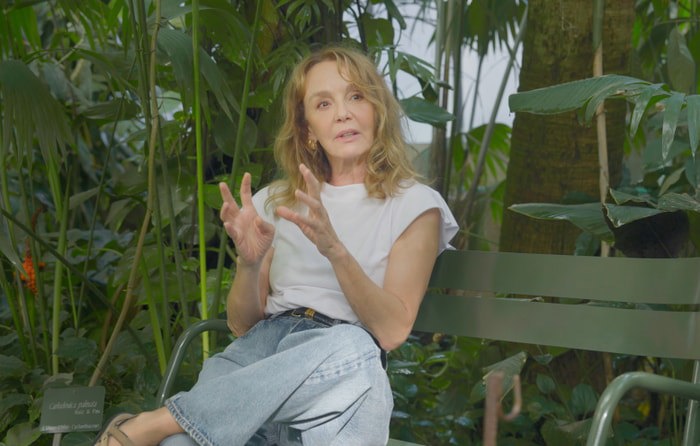
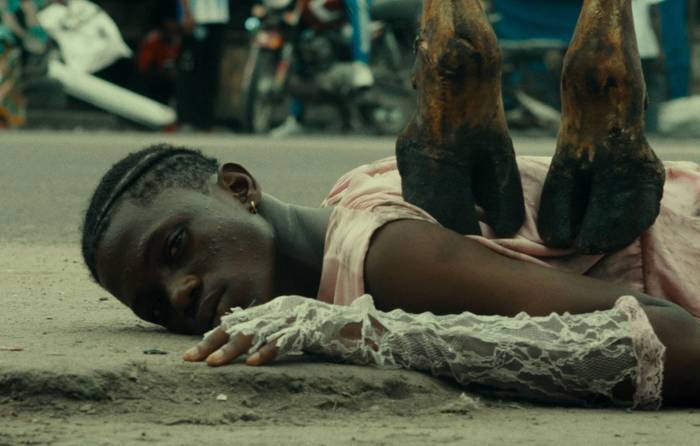
At the heart of the film is the Black radical imagination. The narrative is fueled by dreams of futures that refuse to be oppressed by structures of Whiteness, Capitalism, Imperialism and Patriarchy. While we wanted the film to take you on a journey to outer space, we also wanted it to take you inward. We wanted you to cross the event horizon of your own imagination and think about what it feels like to be free - individually and collectively. We wanted these scenes to feel like invitations to unfurl your wings and dream about liberation and what that might feel like in your body.
How did the poetry, visuals and overarching sonic journey inform one another over the process?
We organised the process so that all the elements could feel as interconnected as possible. We wanted the poetry, visuals and score to be engaged in a call and response that made the film feel like it was a fluid conversation between all three. In order for this to happen we had to be in constant dialogue ourselves, allowing the ideas to become, blossom and change as we developed the film.
The score and the poetry needed to be as integral to the installation as the visuals. For the score we started speaking in depth with Melo-Zed long before any visuals had been shot, wanting to create the sound and visuals in tandem with one another. It meant that he was as much a part of the development of the work as we were. In conversations between Melo, Alex and Errol (Touching Bass) and us, we shared sonic references and conceptual ideas, creating a dialogue that allowed for the sound you can hear in the installation. What Melo made is amazing. It picks up on the references like the spacey dub of Lee Scratch Perry, the otherworldly space of grime, the call and response of Abeng horns, the spiritual reverberations of Nyabinghi drums and the contemporary sounds of UK jazz to make a piece that situates you deep within the echo of Black British musical traditions, while also making something that places you outside of now in a yet unexplored future.
What were your key references for the film?
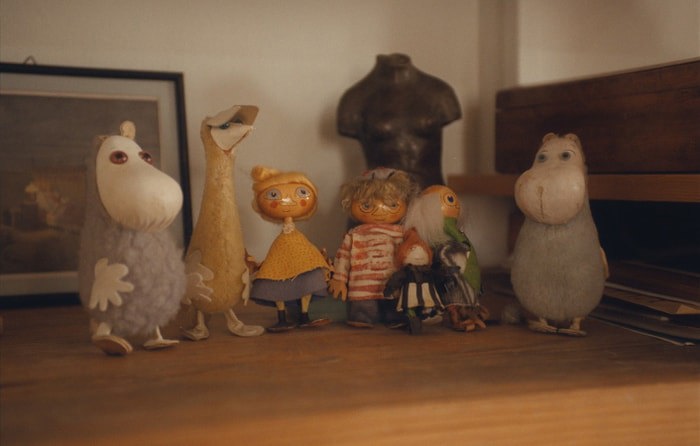
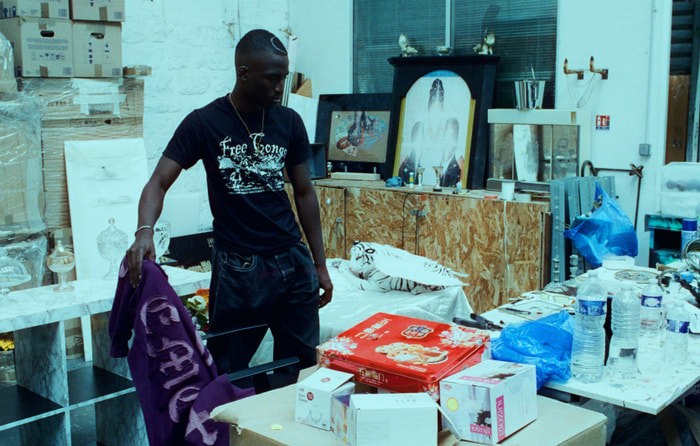
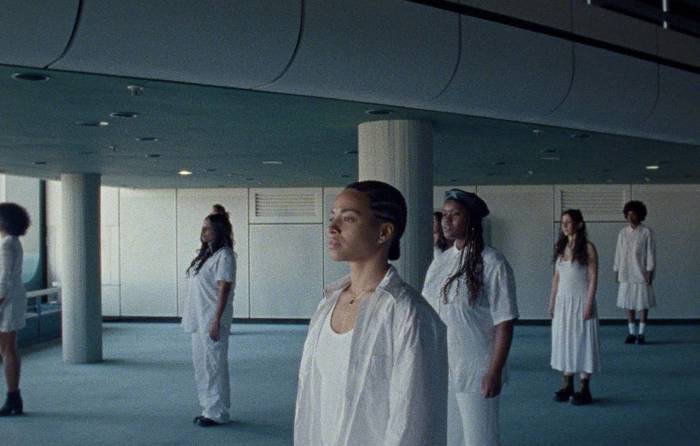
Robin D.G. Kelley’s book Freedom Dreams was a central text whilst developing the themes of the film and ideas around the Black radical imagination. Freedom Dreams outlines the potential of Black radical feminist thought, poetry and surrealism as some of the most powerful tools for liberation and reimagining our world. Another key reference was Simon Wheatley’s photographs documenting the 90s grime scene. One of the photos in particular, Bedroom studio, Isle of Dogs, East London, was the anchor for one of the scenes in which a group of friends gather in a room to dream together.
We were also watching a lot of sci-fi throughout the development of the film, looking for filmmaking techniques and cinematography that would nod towards space travel. The ending of Stanley Kubrick's 2001: Space Odyssey was an inspiration for some of the editing techniques we played with.
Did your thought process shift between the multi-channel installation and the single-screen film?
Infinitely. It felt like making a whole new piece of work. We had to translate a journey we had created for five screens into something that would still be impressive and emotive on a single screen. For the installation we were able to play with so many elements to knit together a somatic and embodied experience – we had 11 speakers to play with, a screen on the ceiling, the colour of the room, relationships between screens in each corner of the room. What we made was multisensorial, spatial and dynamic. The challenge with the single screen was to craft a journey that spoke on its own terms while simultaneously taking the audience on a dance through the ideas of the installation. To do this we had to almost forget what we’d made and start from scratch.
Can you tell us about some of your collaborators and their involvement?
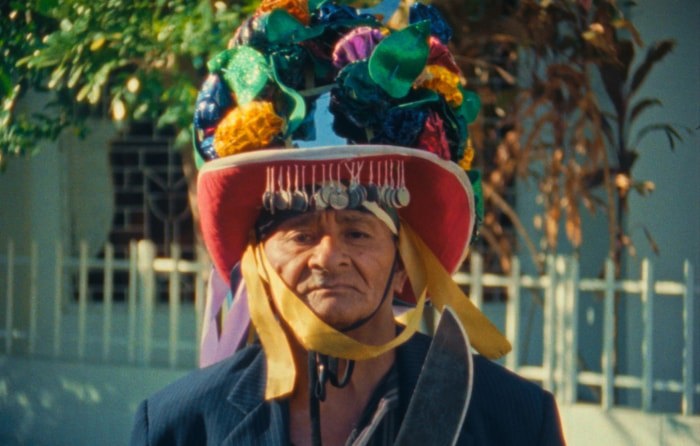
Without deep and sustained collaboration we would not have been able to make this work. From long and ongoing conversations with Anaiis, who brought us the quote from Resmaa Menakem that anchors so many of the film’s ideas, to shooting our first scene with Rowdy SS on the Sunday morning of Carnival at 5am before we had finished putting together our final treatment. We also wouldn’t have a film without the inspired styling that Bevan Agyemang brought across the whole work, working closely and creatively with us to turn our ideas into a clear aesthetic language that seamlessly binds the film’s scenes together. Kai Blamey Nguyen, our DOP, saw things we couldn’t, turning our image references into multidimensional, inspired and spiritual images. And of course, it’s impossible not to mention Divine Southgate-Smith and her willingness to make a black hole that also needed to be a visual representation of the Black radical imagination that created a journey towards and across an imagined event horizon! Honestly, we could write a whole book about our collaborators. Everything we did was made in the back and forth of dialogue. It started with the collaboration between us and rippled out from there.
August 2, 2024