5 Films Shaped by Design and Architecture
A journey into set design, and five films celebrating architecture and interior design on screen
As a reflection of the landscape its characters inhabit, the way spaces and interiors are shaped on-screen can offer a window into their inner worlds – and the tone of events to come. Here, we consider five films that navigate the action through the lens of key design movements and architectural styles, inviting complex visual narratives to be communicated through set design…
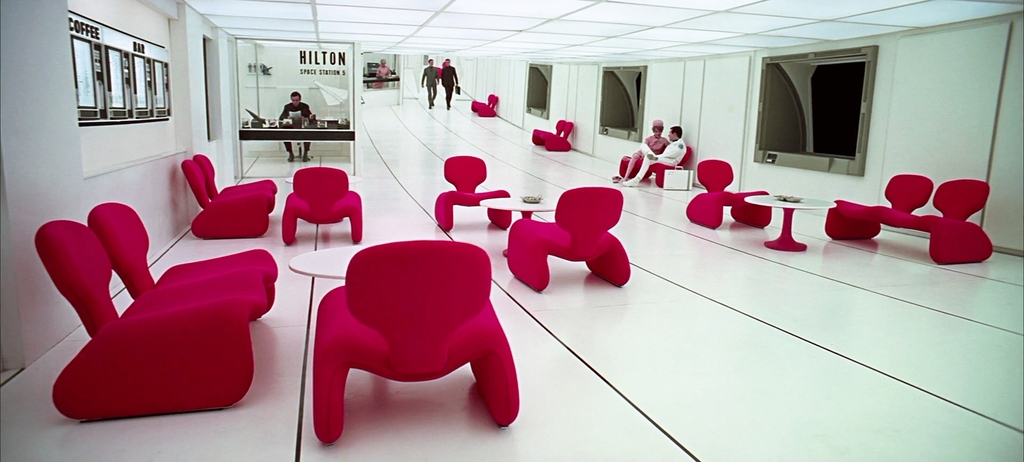
2001: A Space Odyssey (dir: Stanley Kubrick)
Informing his approach to design as much as his on-set presence, Kubrick’s obsessive attention to detail produced one of film’s most memorable sets in 2001: A Space Odyssey– a collision of 1960s Space Age design and Baroque grandeur. Before The Shining’s David Hicks-designed carpet, late greats of 20th century Modernism helped shape his striking vision of the future, from the undulating curves of French industrial designer Olivier Mourgue’s Djinn sofas, to Eero Saarinen’s pedestal tables.
High-Rise(dir: Ben Wheatley)
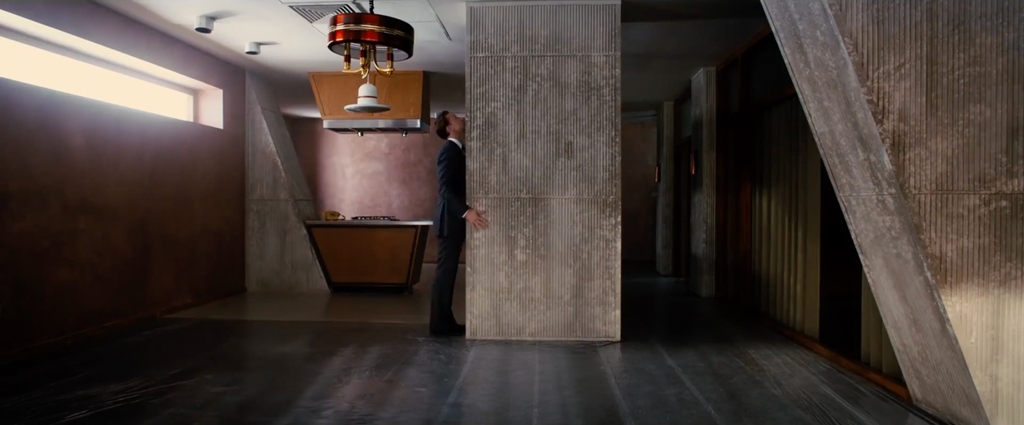
Interpreting J.G. Ballard’s dystopian world through severe lines and ribbed concrete, Ben Wheatley’s High-Rise is a striking celebration of Brutalist architecture. Mirroring Robert Laing’s highly polished but emotionally disconnected demeanour in angular vaulting, sparse living spaces, and sky-high ceilings, the stylized environment invites a sense of unease, serving as a visual portent of the twisted politics that send its residents into chaos.
Playtime (dir: Jacques Tati)
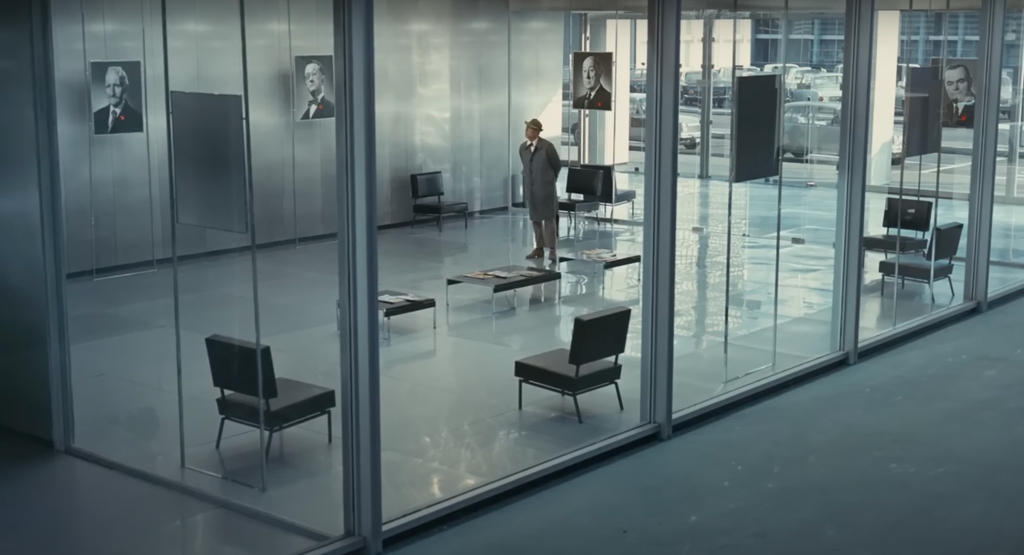
Considering its custom-build set as the film’s main protagonist, Jacques Tati’s Modernist masterpiece constructs a critique of industrialization and modern living around its methodically segmented office spaces, and 360° sheet glass. Behind its aesthetic beauty, Playtime’s clinical architecture is used to reflect the French auteur’s concerns about societal restriction, increased surveillance, and the breakdown of organic interaction in the fast-evolving landscape of 1960s Paris.
Suspiria (dir: Dario Argento)
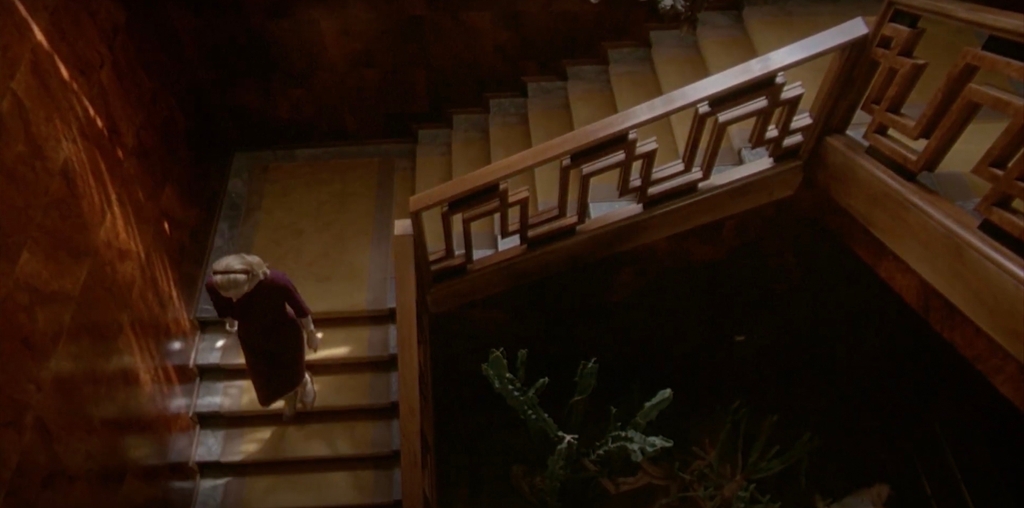
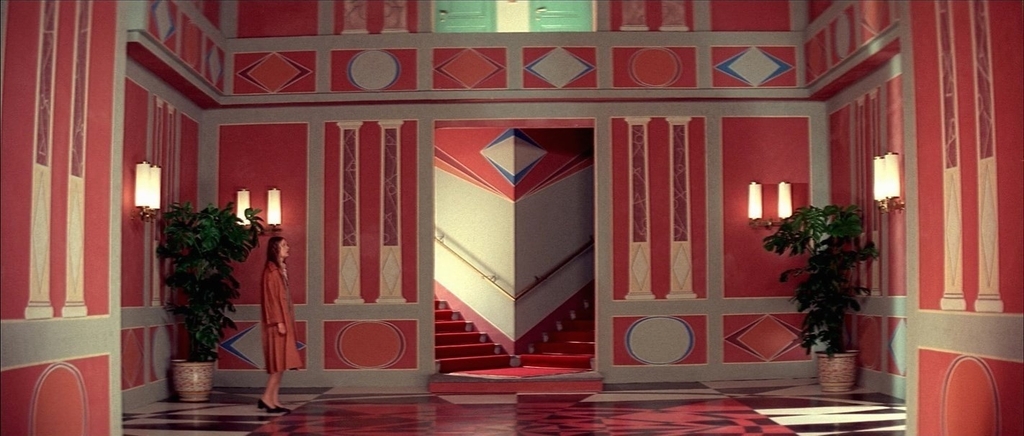
Employing unnervingly jarring interiors to amplify the sense of disquiet, Dario Argento’s cult horror captures the essence of Giallo in its lurid clash of influences. A visual assault, drawing on Art Deco and Art Nouveau, the Tanz Akademie navigates through geometric panelling and kaleidoscopic floor tiles, with illustrations from Aubrey Beardsley’s Salome and Escher-inspired wallpapers contributing to a hallucinatory effect, intended to disorient.
I am Love (dir: Luca Guadagnino)
Against the striking backdrop of Villa Necchi Campiglio, the first film from Luca Guadagnino’s Desire trilogy casts the Castellini Baldisseras’ iconic Milan residence in a starring role – situating the Recchi family within the very walls their inspiration occupied. Designed by architect Piero Portaluppi, the 1930s villa combines the majestic scale of Italian rationalism with Art Deco elements, poised around marble, bronze, and floor-to-ceiling glass, an elaborately fretted staircase carving through its center.